Sound Insulation Solutions: How to Guarantee Quiet and Privacy in Your Project Using Dry Construction Systems?
Sound Insulation Solutions: How to Guarantee Quiet and Privacy in Your Project Using Dry Construction Systems?
26 September 2026
Noise is one of the biggest hidden challenges in designing modern spaces. Whether you are designing hotel rooms, administrative offices, or even your private villa, the failure of walls to block sound transmission means a lack of privacy and a significantly reduced quality of life for the users.
Many believe that building thick concrete walls is the only solution to prevent sound transmission, but modern engineering has proven otherwise. Today, Dry Construction systems and “Gypsum Board” partitions lead the scene as the best and most effective solutions to achieve acoustic insulation that outperforms traditional walls—all with thinner profiles and lighter weight.
How do these systems work? And how can you apply them in your project to ensure absolute quiet?
The Secret of Superiority: “Mass-Spring-Mass” Engineering
Traditional walls (block and cement) rely solely on “mass” to block sound, which requires massive thickness to be effective. Drywall partitions, on the other hand, rely on a smart physical principle known as Mass-Spring-Mass.
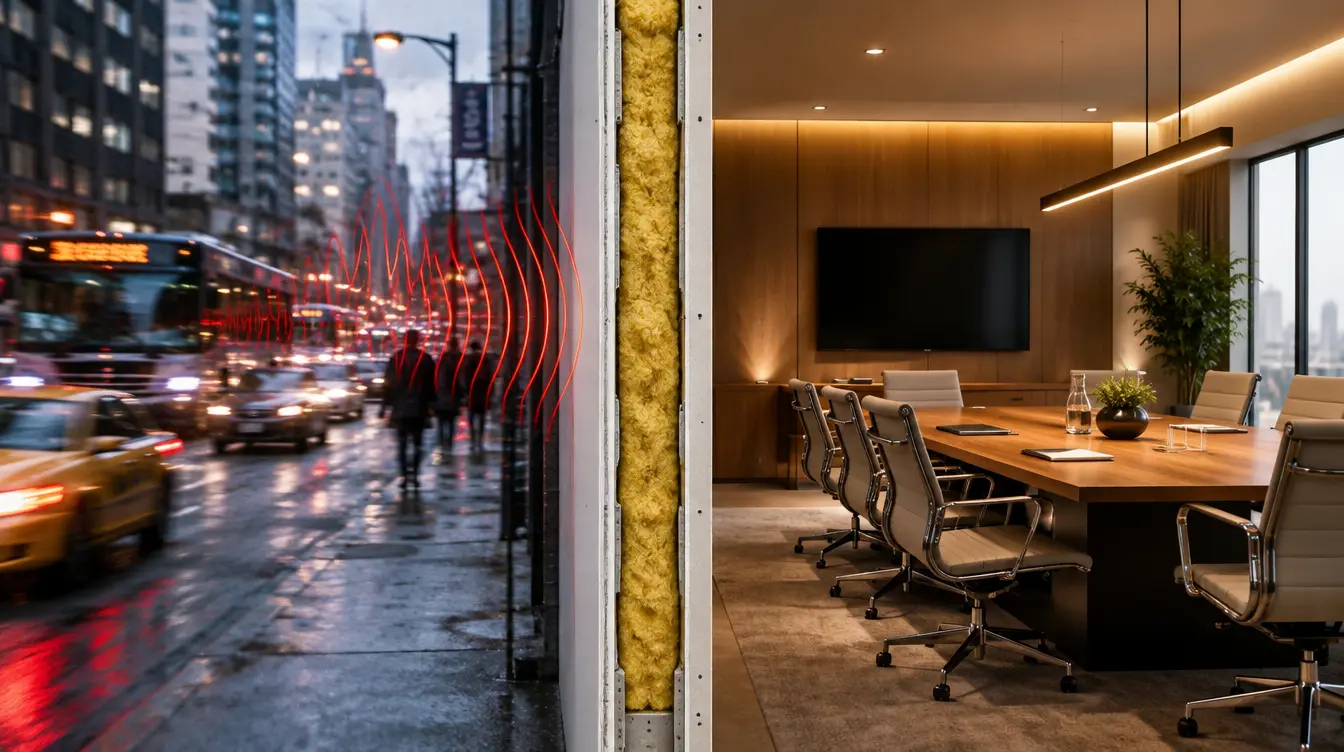
The wall consists of two layers of gypsum board (the mass) separated by a metal cavity filled with sound-absorbing materials (the spring or void). This configuration scatters sound waves and depletes their energy before they can cross into the adjacent room, granting your space a high Sound Transmission Class (STC) rating.
3 Essential Elements for a Professional Soundproof Wall
To achieve maximum sound insulation using gypsum board, the system must seamlessly integrate three key elements:
1. Sound-Absorbing Fillers (Rock Wool or Glass Wool)
Rock wool or glass wool panels are the beating heart of the insulation system. These panels are placed inside the metal framing (studs and tracks) between the gypsum boards. Thanks to their dense fibrous structure, they trap sound waves and convert them into minute thermal energy, effectively preventing echoes and the transmission of airborne noise.
2. High-Density Acoustic Gypsum Boards
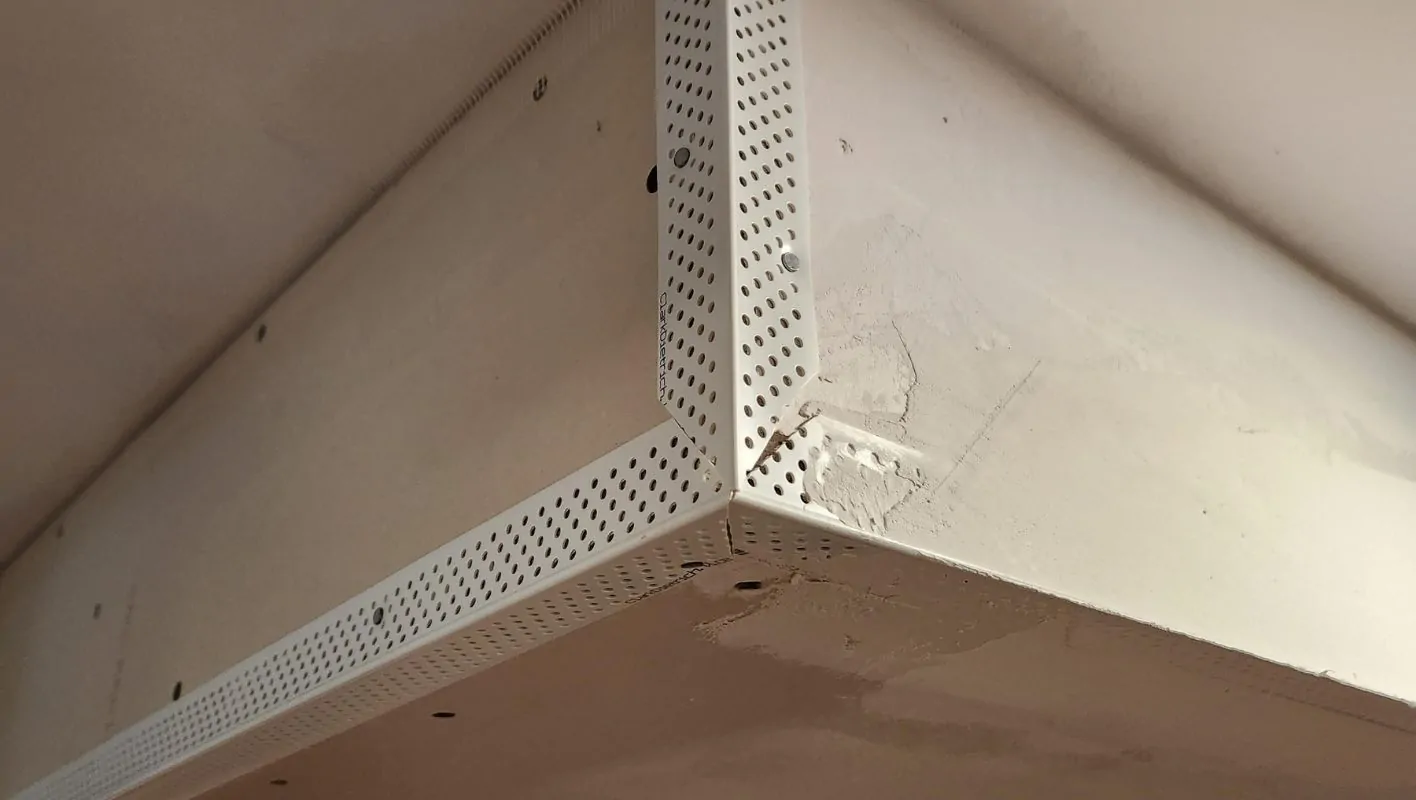
For superior results, especially in home cinemas or recording studios, it is highly recommended to use gypsum boards specifically designed for sound insulation (Acoustic Boards). These boards feature a higher density than standard panels, and some come perforated in calculated geometric patterns to absorb annoying sound frequencies and prevent them from bouncing back.
3. Acoustic Sealants & Tapes
“Sound leaks like water”—this is an indisputable engineering rule. Even if you use the best boards and rock wool, if the metal frame touches the floor or ceiling directly, “vibrational sound” will easily transmit through the metal. The solution lies in applying rubber Acoustic Tapes under the metal tracks before fastening them, and using acoustic sealants to completely close any microscopic cracks or gaps around the edges of the wall.
Indispensable Applications in Modern Projects
-
Hotels and Hospitals: To ensure patient confidentiality and total guest comfort by installing double-insulated partition walls between rooms.
-
Offices and Meeting Rooms: To prevent sensitive information leakage and provide a quiet work environment that boosts employee productivity.
-
Modern Homes: To isolate bedrooms from noisy living rooms and home cinemas, and to significantly muffle outside street noise.
At Verona Decor, we offer you a complete, integrated dry construction system that guarantees the highest standards of acoustic and thermal insulation. We provide a wide range of internationally compliant gypsum boards, alongside sturdy metal frames, premium insulation materials (rock wool), and specialized accessories designed to prevent sound leakage.
Invest in the quiet and privacy of your project. Contact our experts today to equip you with the precise engineering solutions and materials that meet the rigorous insulation requirements of your space.